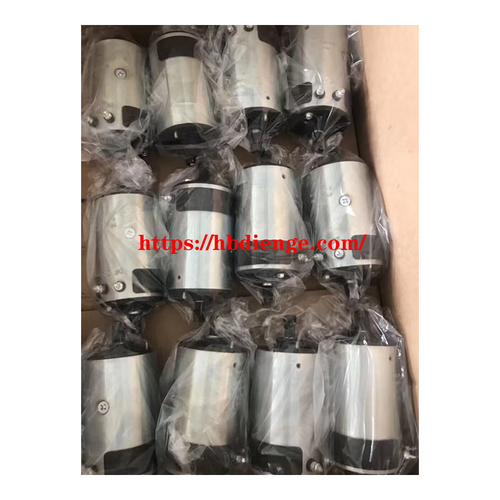
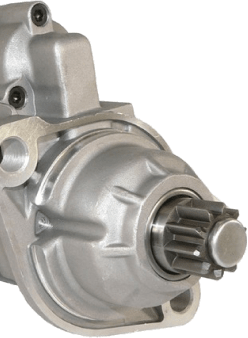
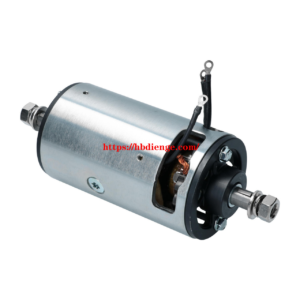
General Description of DC Generator
https://hbdienge.com/product/0101206027-0101206029-starter-motor-0101206105-intuitive-integrated-motor-lj-ge160-6-2500l2-alternator-lj-geg180-6-2500l18-lj-geg200-6-2600l19-10-%e5%a4%8d%e5%88%b6/
1. Overview
A DC (Direct Current) generator is a core electromechanical energy conversion device that transforms mechanical energy into direct current electrical energy based on the fundamental principle of electromagnetic induction. As one of the most classic and widely used power generation equipment, it features stable output voltage, simple structure, reliable operation and convenient speed regulation. It is universally applicable to industrial production, transportation, communication equipment, power supply backup and other general scenarios, serving as an essential power source for various low-voltage and stable-current electrical systems.
2. Basic Working Principle
The operation of a general DC generator follows Faraday’s Law of Electromagnetic Induction. When a conductor cuts magnetic flux lines in a magnetic field, an electromotive force (EMF) is induced in the conductor. The direction of the induced EMF is determined by Fleming’s Right-Hand Rule. During operation, the external driving device drives the generator armature to rotate continuously, making the armature windings repeatedly cut the magnetic field lines generated by the stator magnetic poles.
Notably, the current induced in the rotating armature coils is alternating current (AC). The core component that realizes DC output is the commutator. Cooperating with stationary carbon brushes, the commutator mechanically rectifies the alternating EMF generated in the armature windings. It reverses the circuit connection synchronously when the coil current reverses, ensuring the current output to the external load circuit remains unidirectional stable direct current, thus completing the AC-to-DC conversion inside the generator.
3. Main Structural Components
The general DC generator adopts a mature and standardized structural design, mainly composed of stationary and rotating parts, with compact layout and easy maintenance. The key components are as follows:
3.1 Stator Assembly (Stationary Part)
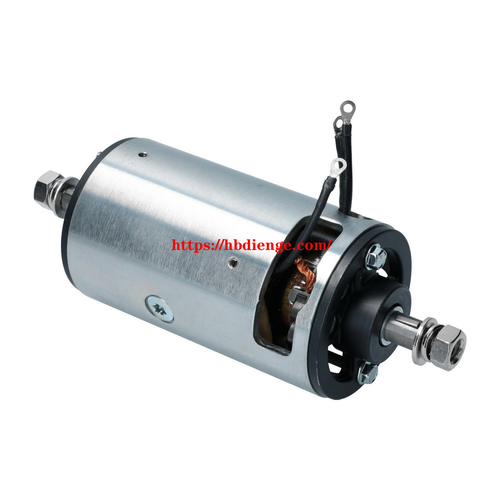
The stator is the fixed part of the generator, mainly including magnetic poles, field windings, frame and end covers. Its core function is to establish a stable and uniform working magnetic field. According to different excitation modes, the magnetic field is generated either by permanent magnets or energized field windings. The high-rigidity frame fixes all stator components and bears mechanical vibration and load stress during operation, ensuring the overall stability of the equipment.
3.2 Armature Assembly (Rotating Part)
The armature is the rotating power-generating core, consisting of armature core, armature windings and rotating shaft. The laminated silicon steel armature core reduces eddy current loss. The embedded armature windings are the key conductors for inducing EMF. Driven by the rotating shaft, the armature runs at a constant speed to continuously cut magnetic flux and generate induced electric energy.
3.3 Commutator and Brush Device
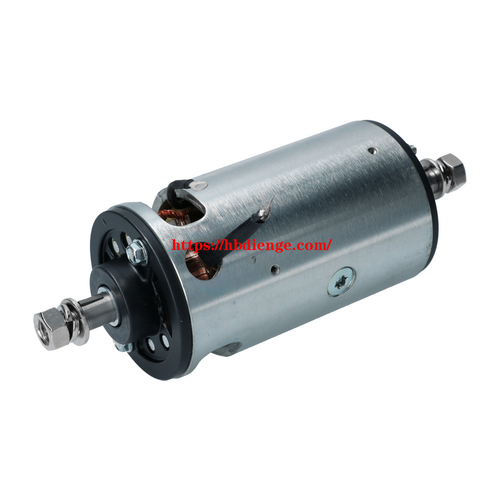
This is the exclusive key structure of DC generators. The commutator is composed of multiple insulated copper segments fixed on the rotating shaft, rotating synchronously with the armature. The stationary carbon brushes are closely attached to the commutator surface, responsible for leading out the rectified DC power to the external circuit. This matching structure guarantees stable unidirectional DC output and effectively reduces current fluctuation.
4. Common Classification of General DC Generators
According to different excitation modes, general DC generators are mainly divided into two categories, covering most civilian and industrial universal scenarios:
4.1 Permanent Magnet DC Generator
It uses permanent magnets to provide a magnetic field, eliminating field windings and excitation power supply. It has the advantages of simple structure, low energy consumption, small size and convenient use. It is widely used in small power supply scenarios such as portable equipment, small wind power generation, vehicle auxiliary power supply and instrumentation power supply.
4.2 Excited DC Generator
It relies on energized field windings to generate a magnetic field, and is subdivided into series-excited, shunt-excited and compound-excited types. This type of generator features adjustable magnetic field strength, flexible voltage regulation and large power output range, suitable for medium and large industrial equipment, mining machinery, railway power supply and other high-power general working conditions.
5. Core Advantages
-
Stable Power Output: After commutator rectification, the output DC voltage and current have small fluctuation, which can meet the stable power demand of precision electrical equipment.
-
Simple Regulation Performance: The output voltage can be adjusted conveniently by changing excitation current or rotating speed, with flexible load adaptability.
-
High Operational Reliability: Mature structural design, fewer vulnerable parts, strong resistance to harsh working environments such as low temperature and dust, and long service life.
-
Convenient Maintenance: Standardized component design, simple assembly and disassembly, low maintenance cost and easy daily inspection and fault handling.
-
Wide Applicability: It can work stably with various mechanical driving devices, and is compatible with multiple universal power consumption scenarios without complex matching equipment.
6. Main Applications
As a general-purpose power generation device, DC generators are widely used in various fields that require stable DC power supply. In the industrial field, they provide power for DC motors, industrial control systems and electrolysis equipment. In the civil and transportation field, they serve as vehicle power generation equipment, small wind and hydro power generation units. In the communication and emergency power supply field, they act as backup power sources for base stations, instrumentation and emergency lighting equipment. In addition, they are also commonly used in teaching experiments and small mechanical supporting power systems due to their stable performance and simple operation.
7. Conclusion
With its mature working principle, standardized structure, stable performance and wide adaptability, the general DC generator remains an indispensable basic power generation equipment in the electromechanical industry. It can efficiently and stably complete the conversion from mechanical energy to DC electrical energy, meet the diversified power demand of universal scenarios, and has high practical value and popularization value in both traditional industrial production and civilian power supply fields.